Over the past several days, major technology outages have affected Microsoft 365, the FAA, JPMorgan Chase, United Airlines, Apple and even systems at the NSA. With so many disruptions happening close together, it’s natural to wonder whether we’re seeing a coordinated cyberattack.
So far, officials say no. U.S. officials said they found no evidence that the incidents were part of a coordinated cyberattack (CNBC). Instead, reported causes have included software bugs, infrastructure problems, maintenance and updates.
That may provide a more important lesson for businesses:
You don’t need a cyberattack to experience cyberattack-level disruption.
What These Technology Outages Have in Common
The individual incidents were different, but together they show how dependent we’ve become on interconnected technology (CNBC; NSA details via NBC News):
| Organization | What happened | Reported cause |
|---|---|---|
| Microsoft 365 | Disruptions to Outlook and other cloud services | Issue tied to a network capacity upgrade |
| FAA | Technology problems contributed to a nationwide ground stop | Aging, overloaded infrastructure |
| JPMorgan Chase | A software problem affected transactions | Software bug |
| United Airlines | A system outage briefly affected departing flights | System outage |
| Apple | Problems with multiple services | An internal update |
| NSA | A classified network was temporarily degraded; officials said mission-critical capabilities remained operational | Scheduled maintenance |
The common thread isn’t cyberattack. It’s technology dependency and resilience. TCI recently discussed this in Microsoft 365 Outage: Why You Need an Emergency Inbox: if a critical cloud platform becomes unavailable, businesses need a plan to keep operating. We followed it with the FAA flight grounding and the major bank outages, each with the same lesson.
Now Add AI Agents
At almost exactly the same time, Microsoft announced its new AI Transparency Initiative, working with more than 40 organizations, including Accenture, Adobe, KPMG, Mastercard and Volvo Cars, on common approaches to AI transparency, security and governance. Microsoft’s guiding principle is especially timely:
Greater AI autonomy requires greater transparency.
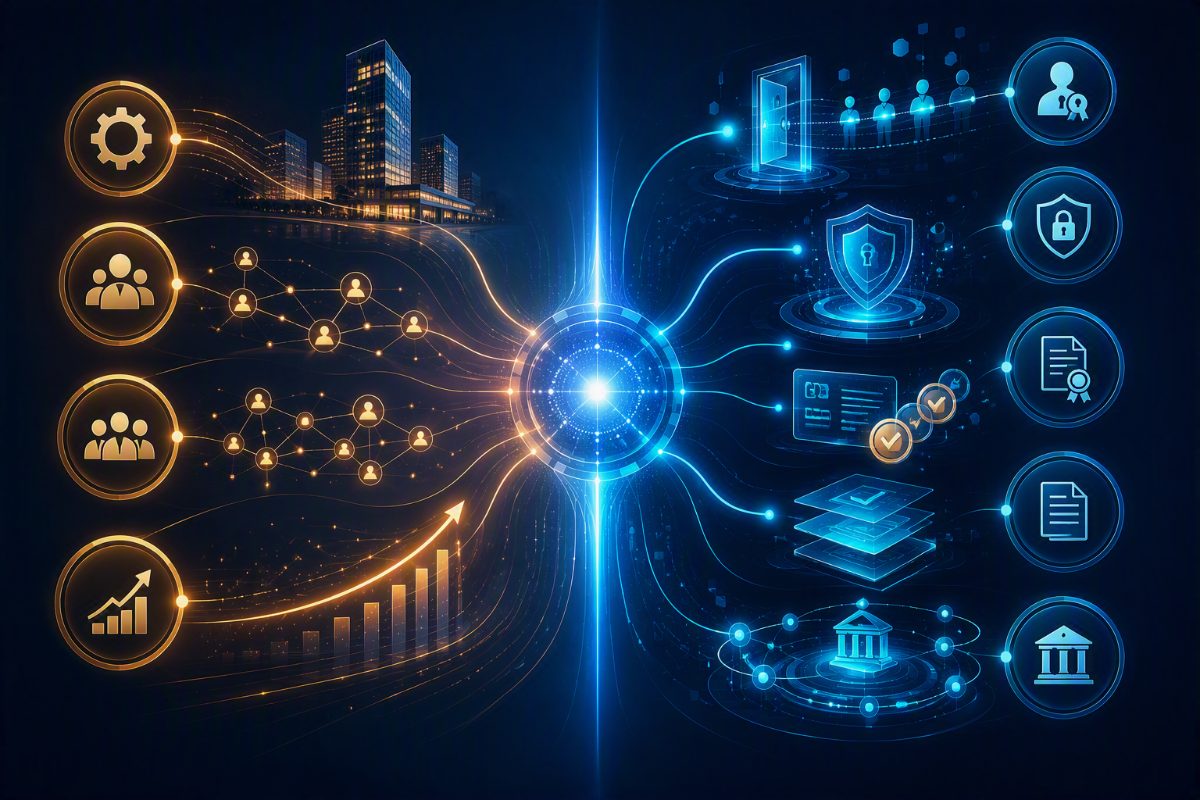
AI agents are beginning to connect to company data, applications, tools and credentials. Some can perform actions without requiring human approval at every step. That means businesses need to think about AI as part of their overall cybersecurity and technology strategy.
Microsoft’s Approach: See, Verify and Control
Microsoft describes three important principles for enterprise AI:
👁️
See
Understand what an AI agent accessed, which tools it used and what actions it took.
✔️
Verify
Maintain independent evidence of AI activity rather than relying only on what the AI model says happened.
🛡️
Control
Decide what information AI can access, what actions it can perform and when human approval is required.
These are cybersecurity principles as much as AI principles.
What Should Businesses Do?
Before giving AI agents greater access to company systems, businesses should answer five questions:
- What company data can the AI access?
- What actions is the AI allowed to perform?
- Who owns, and is responsible for, the AI agent?
- Can we independently monitor and audit its activity?
- What happens if the AI, cloud platform or another critical system fails?
The outages we’ve witnessed are reminders that technology isn’t perfect. The answer isn’t to stop using cloud services or AI. It’s to build cybersecurity, monitoring, governance, redundancy, backup and business continuity around the technology your business depends on.
Use AI, But Stay in Control
At TCI Technologies, we believe businesses should embrace AI where it creates meaningful value while maintaining control over their data, security and business processes.
Whether you’re considering Microsoft Copilot or other AI platforms, AI adoption should be part of a broader technology strategy that includes cybersecurity, identity, permissions, data governance and business continuity. Microsoft’s AI Transparency Initiative shows these controls will become increasingly important as AI agents become more capable. Learn more about our AI advisory services.
Technology will fail. AI will make mistakes. The goal is to make sure your business is prepared when either happens.
Talk to TCI about AI readiness, cybersecurity and business continuity → or call (516) 484-5151.